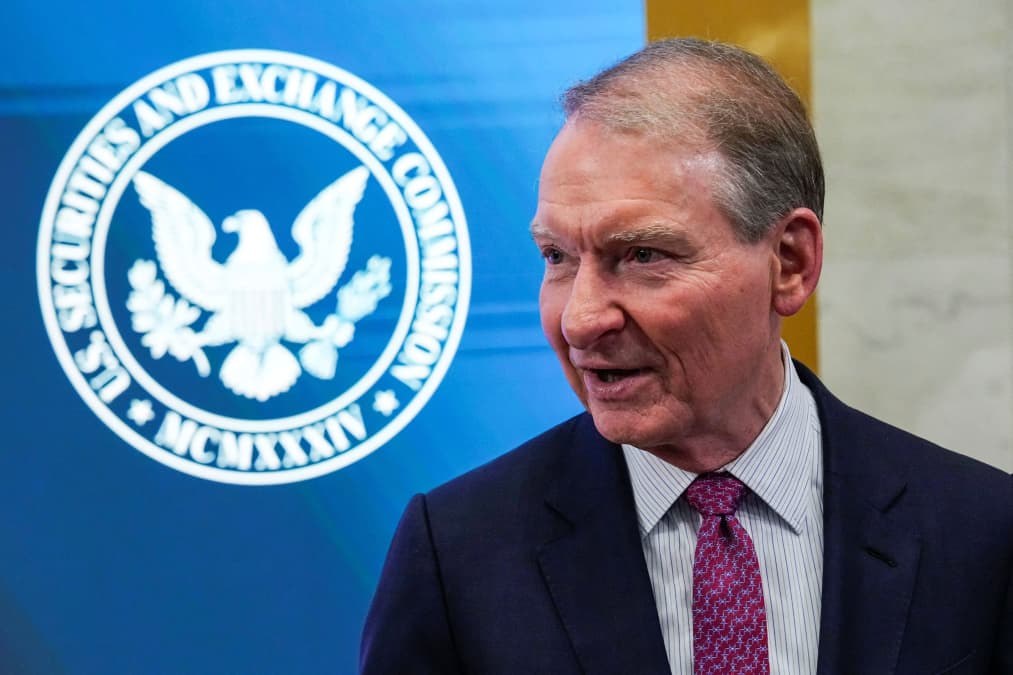
The Securities and Exchange Commission on Thursday issued an order creating a regulatory pathway for certain trading venues to issue tokenized representations of publicly traded U.S. stocks, effective immediately.
The so-called Innovation Exemption provides certain trading platforms and liquidity providers with the regulatory relief needed to facilitate tokenized stock trading, provided they meet certain conditions. Two of the requirements have emerged as key points of contention in the investment community: Holders of stock tokens must retain the same rights they would have with traditional equity holdings, and companies must be able to object to having their securities represented as tokens.
The long-awaited move by the securities regulator comes two days after the Clarity Act, crypto's most consequential push for regulatory certainty, failed to advance in the Senate. The crypto market structure bill would have established clear rules for how digital assets, including tokenized securities, are classified and regulated. Now the SEC is moving to define that regulatory boundary through its existing authority.
"The Innovation Exemption is designed to resolve challenges that have prevented responsible innovation from taking root in the United States while providing investor protections and market integrity standards," SEC Chair Paul Atkins said in a statement.
Though not a formal rulemaking, the five-year exemption is meant to open up activity in the market that could inform final rules and perhaps even help Congress determine whether new laws are needed. It's part of the agency's "Project Crypto" initiative, launched last year, to bring America's financial markets onchain.
"The Commission is not cementing today's technology as the standard for tomorrow," Atkins said. "Instead, it is allowing the market to evolve, monitoring its development, and using that insight to inform a nimbler and future-ready regulatory framework. ... Critically, this interim measure must be followed by durable rulemaking to ensure that onchain markets remain a viable pathway as our capital markets continue to evolve."
Tokenization — the process of issuing digital representations of publicly traded securities, real world assets or any other form of value on a blockchain network — has become a major topic of interest in the market given the potential for blockchain technology to improve accessibility and liquidity across financial assets.
Coinbase, Robinhood, Gemini and Payward's Kraken exchange have launched offshore tokenized equity offerings but have yet to offer it to U.S. customers.
With greater adoption, tokenization could change how securities are traded and settled, potentially enabling 24/7 trading and allowing tokenized assets to integrate more easily with blockchain-based financial infrastructure.
There are potential drawbacks, however, including increased volatility and greater exposure to large price swings when trading activity is thinner.
Thursday's Innovation Exemption includes volume limits to mitigate potential risks and major swings.
A stock by any other name
As companies increasingly explore tokenized stocks and other assets, the push is raising questions about what rights tokens should actually provide for holders. The debate centers on whether investors should receive the same economic and shareholder rights as they would with traditional shares — particularly voting rights.
The issue came into sharper focus after a public fight between the CEOs of Robinhood and AMC over Robinhood's stock-token model. AMC CEO Adam Aron argued that by creating exposure to AMC stock without the issuing company's involvement, Robinhood and others enabling the practice undermine the traditional relationship between companies and their shareholders.
The new Innovation Exemption stipulates that stock tokens need to provide holders with the same rights and privileges as the traditional securities, including rights to receive dividends and exercise voting rights.
Companies can object to and prevent their security from trading as a token. Trading platforms should notify the company of their intention to tokenize the shares and wait 30 days after the company receives the notice to start trading the token, according to an SEC spokesperson. If the company objects in that 30-day period, the trading venue can not make the tokenized stock available for trading, he added.
Despite concerns, the spokesperson said the Commission has had discussions with issuers and that there is growing optimism about the potential of tokenization and that feedback from the issuer community suggests the technology will be adopted in some form.
Robinhood said this week it's now moving to address those concerns. The company plans to let stock-token holders redeem their tokens for the underlying shares on a 1:1 basis and add voting rights.