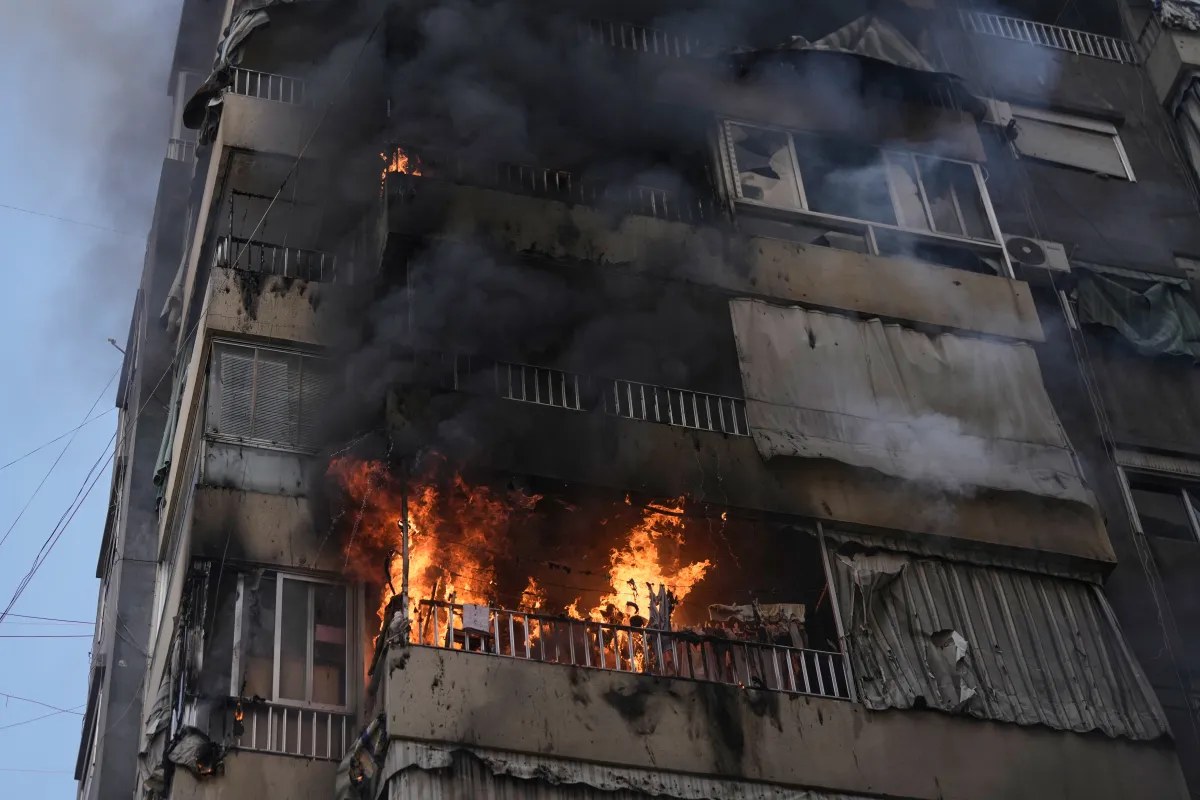
U.S. forces have intensified strikes across the Persian Gulf, launching fresh assaults on Iranian drones and naval assets as Washington races to reopen the Strait of Hormuz. Nearly three weeks into the U.S.-Israeli war on Iran, the fight over the world’s most critical energy chokepoint has pushed oil prices higher and widened the conflict across multiple fronts.
What To Know On Day 21
- U.S. warplanes and attack helicopters hit Iranian drones and vessels as part of a broader push to clear the Strait of Hormuz.
- Iran’s mines, missiles and armed drones have severely restricted shipping through the strait, a key route for global oil and gas.
- Eid al-Fitr and Nowruz celebrations were overshadowed by new strikes and retaliatory fire across the region.
- Kuwait said a drone attack sparked fires at the Mina al-Ahmadi refinery for the second day in a row.
- Israel launched targeted attacks on Tehran after Iranian missile fire triggered sirens in Jerusalem and northern Israel.
- The Trump administration is weighing lifting sanctions on Iranian oil to stabilize global markets.
- President Trump said he urged Benjamin Netanyahu to halt strikes on Iran’s energy fields.
- Trump criticized NATO allies for refusing to join escort missions in the Gulf, calling them “cowards.”
- Brent crude remained above $108 per barrel; the S&P 500 headed for a fourth straight week of losses.
- Israel said it killed IRGC spokesman Ali Mohammed Naini in a Friday strike.
- Gulf states reported intercepting drones and missiles, with falling debris causing fires in Bahrain.
- Trump will seek an additional $200 billion from Congress to fund the war effort.
In a polarized era, the center is dismissed as bland. At Newsweek, ours is different: The Courageous Center—it's not "both sides," it's sharp, challenging and alive with ideas. We follow facts, not factions. If that sounds like the kind of journalism you want to see thrive, we need you.
When you become a Newsweek Member, you support a mission to keep the center strong and vibrant. Members enjoy: Ad-free browsing, exclusive content and editor conversations. Help keep the center courageous. Join today.
Russia warns Iran strikes risk widening conflict, threatening its own trade routes
Russia voiced alarm on Friday over the expanding wave of U.S. and Israeli strikes across Iran, warning the attacks risk broadening the conflict and endangering Moscow’s economic interests. Foreign Ministry spokeswoman Maria Zakharova said Russia is “observing with growing concern” what it sees as an intensifying bombing campaign targeting Iranian territory.
Zakharova pointed specifically to the March 18 strike on Bandar‑e Anzali, a major port on the Caspian Sea that serves as a crucial logistics hub for Russian‑Iranian trade, including food shipments. She said the attack underscored how the conflict is beginning to spill into areas vital to regional commerce.
Accusing the U.S.–Israeli “coalition” of fueling escalation, Zakharova warned that continued strikes risk pulling Caspian littoral states into a broader confrontation. Moscow has repeatedly urged de‑escalation as the war enters its fourth week, arguing that the widening scope of attacks threatens both regional stability and its own economic corridors.
WATCH: Japanese PM Sanei Takaichi condemns Iran during Oval Office visit
Qatar and UAE leaders urge immediate de-escalation after Iranian attacks
Qatar’s Emir Sheikh Tamim bin Hamad Al Thani and UAE President Sheikh Mohamed bin Zayed Al Nahyan held a phone call to discuss the fallout from Iran’s recent attacks on both countries, according to a statement from the Amiri Diwan.
The two leaders warned that the strikes pose serious risks to regional security and stability, calling them a blatant violation of state sovereignty and international law. They stressed the need for an immediate halt to hostilities and urged intensified regional and international diplomatic efforts to prevent further escalation.
Sheikh Tamim and Sheikh Mohamed also reviewed ways to safeguard civilians and protect critical infrastructure, including energy facilities and other vital installations, as Gulf states confront the widening impact of the conflict.
DeSantis rejects calls to suspend gas tax as prices surge past $3.95
Florida Governor Ron DeSantis has dismissed growing calls to temporarily suspend the state’s gas tax, arguing that soaring fuel prices driven by the war in Iran cannot be solved with a “simple fix.” His comments come as Florida drivers face some of the steepest price increases in the country.
Crude prices have surged since the February 28 U.S.–Israeli strikes that killed Iran’s former leader, Ayatollah Ali Khamenei, prompting Tehran to effectively shut the Strait of Hormuz, a chokepoint for 20 percent of global oil and gas shipments. Brent crude climbed to nearly $120 a barrel earlier this month and has remained above $100 since March 13.
Florida has felt the impact sharply. As of Friday, the average price for a gallon of regular gas hit $3.950, up from $2.924 a month ago and higher than the national average. In Monroe County, prices have already topped $4.18, the highest in the state.
Analysts say Florida’s Gulf Coast location makes it especially vulnerable. “Fuel there can easily be exported to the global market,” said Patrick De Haan of GasBuddy, calling the recent spike “unprecedented.”
Democrats in Tallahassee have urged DeSantis to pause the state’s 23.5‑cent‑per‑gallon gas tax, arguing Florida’s multibillion‑dollar reserves could cushion the blow. Senate Democratic Leader Lori Berman said the state has done “nothing to address Florida’s affordability crisis” as prices climb.
DeSantis has pushed back, saying the federal government must stabilize global energy markets. “Get the cost down internationally,” he said Thursday. “I don’t know that there’s going to be any simple fix.”
Markets slide again as oil surge deepens four-week downtrend
Global markets fell about 1% on Friday as rising oil prices continued to weigh on investor sentiment, extending a month‑long pattern of declining equities and climbing energy costs. The trend has become a defining feature of the economic fallout from the U.S.–Israeli war on Iran.
Brent crude rose to $108 a barrel, up roughly 50% since the conflict began. West Texas Intermediate dipped slightly this week but remains far above pre‑war levels, keeping pressure on inflation expectations.
The sustained price shock is reshaping interest‑rate forecasts. Investors now see a year‑end rate cut as increasingly unlikely for the United States — a shift with major implications for global markets.
Treasuries are flashing warning signs as well. Prices have climbed while yields have fallen, a classic signal of growing anxiety about economic stability. Analysts say the combination of elevated oil prices, persistent uncertainty, and weakening risk appetite suggests the conflict is beginning to exert a broader drag on the U.S. economy.
Iran war Briefing Day 21: Trump calls NATO ‘cowards’
DEATH TOLL (per The Associated Press on Friday): Iran: 1,444. Lebanon: 1,000. Israel: 15. U.S.: 13 troops.
President Donald Trump has called NATO allies "cowards" on Day 21 of the Iran war which saw further Israeli strikes and a pledge by the U.S. to boost its forces in the region.
Alliance members would dispute’s Trump’s Truth Social post that it would be "easy" for them to help the U.S. get ships passing again through the Strait of Hormuz which has been effectively blockaded by Iran in response to American and Israeli attacks.
But spiking oil and natural gas prices hurt Europe and Asia more than a net oil exporter such as the U.S. and Trump’s continued criticism of allies for not pulling their weight in the war will add to pressure on NATO member governments.
Meanwhile, the U.S. will beef up its presence in the Middle East with three more warships and roughly 2,500 more Marines to join the estimated 50,000 troops already there, according to The Associated Press, although much depends on congressional approval to the Pentagon request.
QatarEnergy chief says he warned U.S. of risks to Qatar if Iran’s energy sites were hit
QatarEnergy CEO Saad al‑Kaabi said he repeatedly cautioned international partners — including the U.S. secretary of energy — that any strike on Iran’s energy infrastructure could endanger Qatar’s own gas facilities. Speaking to Reuters, al‑Kaabi said he had long stressed that escalation against Iranian sites would have direct consequences for neighboring producers.
“I was always warning… that that could be detrimental to us,” he said, noting that Qatar’s proximity and interconnected energy networks made it especially vulnerable.
Al‑Kaabi credited Qatar’s rapid evacuation of the Ras Laffan complex for preventing casualties when the site was attacked earlier this month. “It wasn’t easy to pull everybody from offshore — you know 10,000 people evacuated in 24 hours — and shut down all the operations,” he said. “I’m so glad we have zero injuries, zero fatalities. It is because of that decision we took.”
WATCH: Joe Kent promises to not send troops to Iran and adds that he ‘doesn’t support the war’
Silence from Iran’s supreme leader fuels fears of power vacuum in Tehran
Doubts over the condition of Iran’s new Supreme Leader Mojtaba Khamenei intensified Friday after he issued a second major message without any audio, video or verifiably new images — deepening speculation that he is unable to appear in public nearly two weeks after taking power.
The Nowruz statement, read aloud on state television, again offered no proof of life beyond text attributed to him. The absence has become increasingly conspicuous, especially after the killing of his security chief Ali Larijani and Israeli Prime Minister Benjamin Netanyahu’s remark that he did not know who was currently running Iran.
Analysts say the pattern can no longer be explained by security concerns alone. The lack of any visual confirmation has fueled concerns that Khamenei may be incapacitated, leaving a widening leadership void in Tehran as hardliners jockey for influence.
The message itself contained new political claims. Khamenei insisted that recent attacks in Turkey and Oman were Israeli false‑flag operations, an attempt to reassure regional partners while deflecting blame. He also claimed he had anonymously ridden through Tehran in a taxi to hear citizens’ economic grievances — many of which he said he shared.
Nato pulls remaining trainers from Iraq as regional attacks intensify
NATO withdrew the last of its military trainers from Iraq on Friday, citing escalating security risks tied to the U.S.–Israeli war against Iran and a surge in retaliatory attacks across the Persian Gulf. The alliance’s headquarters in Mons, Belgium, said the personnel were being “safely relocated” to Europe.
The NATO mission, established in 2018 to help rebuild and professionalize Iraqi security forces after the collapse of ISIS’ territorial control, had focused on noncombat training and advisory work. Its departure comes exactly 23 years after the U.S.-led invasion that toppled Saddam Hussein and left Iraq vulnerable to insurgency and sectarian conflict.
NATO’s top commander, Gen. Alexus Grynkewich, thanked Iraqi officials and coalition partners, announcing the mission would be temporarily based in Naples, Italy. It remains unclear when — or whether — trainers will return.
The withdrawal underscores the renewed volatility in Iraq, where U.S. forces and Iran‑backed militias have repeatedly clashed. American diplomatic sites were targeted again last week, part of a pattern of attacks linked to the widening regional war.
Roughly 500 U.S. troops remain in Iraq, far below the peak of 165,000 in 2008. NATO spokesperson Allison Hart said the alliance’s training work would continue in some form, stressing that “the safety and security of our personnel is paramount,” while declining to provide further details.
New year begins under fire as fresh strikes hit Tehran
As Iranians gathered to mark the Persian New Year, a new wave of explosions shook Tehran, shattering hopes that the holiday might bring even a brief pause in the fighting. Residents described the attacks as resuming almost the moment the new year began.
“After a heavy night of bombardment, they restarted almost exactly as the new year began,” said one 35‑year‑old woman in Tehran, adding that the blasts seemed to come from every direction. Another resident told CNN they had feared the strikes would resume with the holiday but had still hoped for “a moment of peace.”
The Israel Defense Forces said earlier that it struck Iranian “targets” near Nur, east of the capital. In a later update, the IDF said it had “completed two waves of strikes in Tehran and in central Iran,” hitting dozens of military infrastructure sites overnight.
Iranian media reported that Iran fired missiles toward southern and central Israel in response, with sirens sounding across several areas.
Russia reaps major oil windfall as sanctions ease during Iran war
Russian oil is emerging as one of the biggest economic winners of the U.S.–Israeli war on Iran, as global buyers scramble for alternative supplies and Washington temporarily relaxes sanctions. Analysts say the shift has opened a lucrative window for Moscow, which is capitalizing on the disruption caused by Iran’s closure of the Strait of Hormuz, a chokepoint that normally carries about one‑fifth of the world’s oil and gas.
Following a March 10 phone call with Russian President Vladimir Putin, President Donald Trump announced that the U.S. would waive certain Russian oil‑related sanctions for “some countries” to help offset the supply crunch. The move has triggered rapid changes in global shipping routes: several tankers carrying Russian crude originally bound for China reportedly diverted to India this week.
New data from the Centre for Research on Energy and Clean Air shows Russia has earned an additional €672 million ($777 million) in the first two weeks of the conflict alone, underscoring how the war has reshaped global energy flows.
With the Strait of Hormuz still effectively shut and oil prices elevated, analysts expect Russia’s gains to continue as long as the supply shock persists.
Thousands more U.S. Marines rerouted to Middle East as Iran war enters fourth week
Thousands of additional U.S. Marines and sailors are being redirected to the Middle East as the war with Iran approaches its fourth week, U.S. officials told CNN. The 11th Marine Expeditionary Unit and the Boxer Amphibious Ready Group have had their deployment accelerated and rerouted from the Indo‑Pacific, though it remains unclear whether the entire force will head to the region or only select elements.
One official said the Pentagon has not disclosed when the Marines will arrive or what missions they will take on once in theater. The deployment, first reported by Newsmax, comes as another major Marine force — the 31st MEU and the Tripoli Amphibious Ready Group — is also moving toward the Middle East. The USS Tripoli was spotted near Singapore earlier this week.
It is not yet known whether both MEUs will operate simultaneously or if the 11th MEU will eventually replace the 31st. Each MEU consists of roughly 2,200 Marines and sailors, and when paired with an Amphibious Ready Group, the combined force totals about 4,500 personnel.
The MEUs provide commanders with a wide range of rapid‑response capabilities, from evacuation operations to maritime special operations, aviation support, logistics, and limited ground combat. The 11th MEU describes itself as capable of conducting amphibious missions, crisis response, and contingency operations “at night or under adverse weather conditions.”
Officials say the additional forces could help “relieve pressure” on U.S. operations already underway across the region, signaling Washington’s growing concern about the conflict’s trajectory.
Trump blasts allies as Khamenei issues new message and Lebanon toll rises
President Donald Trump escalated his criticism of U.S. allies on Friday, accusing them of being “cowards” for refusing to help reopen the Strait of Hormuz, which Iran has effectively shut down since the start of the war. The closure has driven global energy prices sharply higher, with Brent crude still trading well above $100 a barrel.
As Iranians marked a subdued Nowruz, the country’s new Supreme Leader Mojtaba Khamenei appeared to issue his second major statement since taking power — again delivered without audio or video and read aloud on state television. Khamenei, who has not appeared publicly since the war began, called for unity and claimed he had anonymously toured Tehran in a taxi to hear citizens’ concerns.
Iran has yet to appoint successors for many of the senior officials killed in Israeli strikes since February 28. A review of official announcements shows more than a dozen top posts remain vacant as Israel continues to target high‑ranking figures.
Meanwhile, the humanitarian toll in Lebanon continues to climb. More than 1,000 people, including at least 110 children, have been killed since Israel launched operations in response to Hezbollah’s rocket fire earlier this month. Israel issued new evacuation orders across southern Lebanon on Friday, and the United Nations warned that roughly one‑fifth of the country’s population has been displaced in just two weeks.
Oil markets remain volatile, with prices easing slightly after Israeli Prime Minister Benjamin Netanyahu said he would heed Trump’s request to halt strikes on Iranian energy facilities. But analysts say the nearly three‑week‑old conflict shows few signs of slowing, keeping pressure on global supply.
Reza Pahlavi calls for ‘free’ and ‘prosperous’ Iran in Nowruz message
Reza Pahlavi, the exiled son of Iran’s last shah, used a Nowruz message to urge Iranians to continue pushing for what he described as a “free” and “prosperous” future. In a written statement marking the Persian New Year, Pahlavi said the past year had been defined by “national solidarity” and “great sacrifices,” arguing that the country had moved closer to a “final victory” over the Islamic Republic.
Framing the struggle as a “patriotic battle,” he praised those killed in opposition to the authorities and pledged ongoing support for their families. Pahlavi said tens of thousands of Iranians had been lost in what he called a long‑running “struggle” against the ruling system, casting their deaths as part of a broader national effort for political change.
White House maintains ambiguity on ground troops as U.S. deployments grow
The Trump administration continues to offer deliberately vague answers on whether American ground forces could enter the war in Iran, even as new military deployments raise questions about the White House’s intentions. Both the president and his defense secretary have repeatedly sidestepped direct commitments, insisting they would not telegraph troop movements.
In a recent interview with The New York Times, President Trump said he was “not putting troops anywhere,” but added that if he were, he would not disclose it publicly — a refrain that has become characteristic of his wartime messaging.
Despite those assurances, U.S. military movements tell a more complicated story. Roughly 2,200 Marines aboard an amphibious assault ship are heading toward the region, alongside A‑10 Warthog aircraft and Apache attack helicopters. The jets and helicopters are typically used to provide close air support for ground forces, a deployment pattern that has fueled speculation about potential escalation.
UK warns Iran against targeting British bases after Araghchi threat
British Foreign Minister Yvette Cooper warned her Iranian counterpart, Abbas Araghchi, not to target U.K. bases, territory or interests, following Tehran’s claim that any U.S. use of British facilities would amount to “participation in aggression.” The exchange came during a phone call on Friday, according to statements released by both governments.
Iran’s Foreign Ministry said Araghchi told Cooper that allowing U.S. forces to operate from British bases would make the U.K. complicit in attacks on Iran. London rejected that characterization, insisting its actions in the region have been strictly defensive.
“The defensive UK operations in the region were a response to the Iranian aggression against Gulf partners,” the Foreign Office said, adding that Cooper stressed Britain’s desire for a “swift resolution” to the conflict.
Iran warns U.K. that hosting U.S. forces is ‘participation in aggression’
Iranian Foreign Minister Abbas Araghchi warned Britain that allowing the United States to use U.K. military bases amounts to direct involvement in the war, according to an account of a phone call posted Friday on his Telegram channel. Araghchi told his British counterpart that Tehran views the arrangement as “participation in aggression” and urged London to halt cooperation with Washington and Israel in both military and media operations.
The message reflects Iran’s growing effort to pressure U.S. partners as the conflict widens across the region. British officials have not publicly commented on the call, but the U.K. has previously said its support for U.S. operations is limited to defensive measures.
Quds Force commander reappears with message praising Iranian forces
Iran’s Quds Force commander, Brig. Gen. Esmail Qaani, resurfaced publicly on Friday after weeks of speculation about his whereabouts, issuing a statement through the state‑affiliated IRIB network that praised Iranian fighters and dismissed rumors surrounding his absence.
Qaani, who had largely vanished from public view following the strikes that killed Supreme Leader Ayatollah Ali Khamenei at the start of the war, lauded Iranian troops for what he described as their global impact. He said they had “drawn widespread admiration and brought joy to believers and freedom‑seekers around the world, while causing anger, astonishment and fear among enemies.”
He also framed recent battlefield losses as a source of renewed strength, saying the “martyrdom of commanders and leaders will bring new growth and renewed vitality” to Iran’s military efforts.
His reappearance follows a surge of online rumors — including claims that he had been targeted or compromised — after reports that he survived the initial wave of strikes on Tehran’s leadership. The new statement appears aimed at projecting continuity within the Quds Force as Iran continues to navigate the fallout of its most significant leadership losses in decades.
Khamenei praises public ‘resistance’ in Nowruz and Eid message
Iran’s Supreme Leader Mojtaba Khamenei marked both Nowruz and Eid al‑Fitr with a statement praising Iranians for what he described as steadfastness in the face of sustained U.S. and Israeli attacks. The message, released through the semi‑official Tasnim news agency, framed the population’s response as a national show of resolve.
Khamenei said Washington and Jerusalem had sought to create “fear and panic” by assassinating senior officials and targeting key military figures, but argued the strategy had failed. Instead, he claimed Iranians had “expanded the defensive front” into neighborhoods, mosques and local communities, delivering what he called a “confusing blow” to their adversaries.
He accused U.S. and Israeli leaders of issuing “contradictory statements and repeated slogans,” describing them as signs of strategic confusion. Khamenei also announced the slogan for the new year: “Resilient economy in the shadow of national unity and national security.”
Netanyahu sends mixed signals on how long Iran war may last
Israeli Prime Minister Benjamin Netanyahu offered two different timelines for the war with Iran, giving sharply contrasting assessments in separate public statements on Thursday.
Speaking in English at a news conference, Netanyahu projected confidence that the conflict could wrap up sooner than expected, saying he saw “this war ending a lot faster than people think.” But in a Hebrew‑language address aimed at the Israeli public, he struck a far more open‑ended tone. “You, the citizens of Israel, are asking: ‘How long will this take?’ And I say: it will take as long as necessary,” he said.
The apparent discrepancy prompted questions about whether Israel’s leadership has a clear sense of the war’s trajectory. When asked to explain the difference, the prime minister’s office told NBC News there was “no disconnect,” insisting the two statements were consistent with one another.
WATCH: European leaders raise concerns over energy security amid Iran war
Israeli strikes kill 20 more in Lebanon, pushing death toll past 1,000
Israeli attacks on Lebanon killed 20 people and wounded 57 on Friday, according to the country’s Disaster Risk Management Unit, marking another deadly day in a conflict now entering its third week.
The latest casualties bring the total number of people killed since March 2 to 1,021, figures published by the National News Agency show. The number of wounded has risen to 2,641, while 134,616 displaced residents are now registered in shelters across the country.
Missile fragment injures one in Jerusalem’s Old City amid Eid holiday
A fragment from an Iranian missile struck the Old City of Jerusalem on Friday afternoon, injuring one person as sirens sounded repeatedly across the capital during the Muslim holiday of Eid al‑Fitr. The Palestine Red Crescent Society said the victim was taken to a hospital with shrapnel wounds.
Israeli police said bomb‑disposal teams and sappers were working at the scene to secure the area and ensure no additional hazards remained. Images released by the Israeli military showed smoke rising near the Al‑Aqsa compound, which has been closed to worshippers since the start of the war with Iran. Additional photos from police documented damage to a section of roadway and fencing.
The strike came as tensions remained high across the region, with Jerusalem experiencing multiple missile‑alert sirens throughout the day. In a statement, Israel’s Foreign Ministry condemned the attack, saying it demonstrated “the madness of the Iranian regime,” accusing Tehran of endangering sites sacred to Judaism, Christianity and Islam.
Qatar arrests two Al Jazeera analysts on charges of supporting Iran
Qatar has detained two Al Jazeera analysts, Fatima Al‑Samadi and Saeed Ziad, on allegations that they expressed support for Iran during the ongoing regional war, according to posts circulating on social media.
The arrests were first highlighted by journalist Ryan Grim, who shared a report from DD Geopolitics stating that both analysts were taken into custody. Al‑Samadi, a senior researcher at the Al Jazeera Studies Center, is known for her work on Iranian affairs and holds a doctorate from Allameh Tabataba’i University in Tehran.
Qatar has not publicly commented on the reported detentions, but the move comes amid what observers describe as a tightening stance on public dissent as the conflict escalates across the region. Doha has faced growing pressure after Iranian attacks on Gulf states, including Qatar, and has intensified messaging around national unity and security.
DeLauro slams administration over lack of transparency on Iran war costs
Representative Rosa DeLauro, a senior Democrat on the House Appropriations Committee, sharply criticized the Trump administration for withholding details about the financial demands of the war in Iran. During a hearing at the U.S. Mission to the United Nations, DeLauro said lawmakers had been given “no accounting” of current spending and “no specificity” about future needs, directing her frustration at Ambassador Mike Waltz.
Her comments come as the Pentagon seeks $200 billion in additional funding for the conflict — a request that amounts to nearly a quarter of the Defense Department’s annual budget. Despite the scale of the proposal, administration officials have yet to provide Congress with a breakdown of how the money would be used or how long the funding is expected to sustain operations.
Members of both parties have pressed for clarity as the war enters its third week and costs continue to rise. For now, lawmakers say they are being asked to approve one of the largest wartime funding requests in years without even the most basic financial details.
Two Indian LPG tankers prepare to transit Hormuz as crude shipments remain frozen
Two Indian‑flagged liquefied petroleum gas (LPG) tankers are preparing to sail through the Strait of Hormuz in the coming days, marking a rare movement of commercial vessels through the waterway as most traffic remains halted due to the threat of Iranian attack, according to shipping data and industry sources.
Both tankers are currently anchored in Gulf waters, data from Kpler shows. Their planned transit comes amid a near‑total pause in crude oil shipments: market assessments indicate no crude tankers have passed through the strait in the past 24 hours. The only recent movement involved an empty crude carrier under U.S. sanctions, which turned back toward Iranian waters on March 18.
Roughly 20% of the world’s oil supply normally moves through the Strait of Hormuz, making the continued shutdown one of the most disruptive maritime choke points in recent history.
Switzerland tightens neutrality rules, halts new U.S. arms export approvals amid Iran war
Switzerland has expanded its wartime neutrality measures, confirming it has stopped approving new weapons exports to the United States since the start of the Iran conflict and has not granted export licenses to Israel for several years. The Swiss government said Thursday that an expert panel will now regularly review all U.S.-bound military exports to ensure compliance with the country’s strict neutrality laws.
The announcement follows earlier reporting that Bern had frozen approvals for U.S. arms shipments. Officials also revealed that Switzerland rejected two U.S. flyover requests last weekend for Iran‑related military operations, though it allowed three others to proceed — each decision made under neutrality guidelines.
Swiss authorities said the restrictions mirror actions taken during previous conflicts. After the 2003 U.S.-led invasion of Iraq, Switzerland imposed similar bans on weapons exports and denied overflight permissions to countries involved in the war, though those measures were later lifted.
Lebanese President condemns attacks on Kuwait in call with Emir
Lebanese President Joseph Aoun has denounced recent attacks on Kuwait, calling them a “blatant violation” of the country’s sovereignty during a phone conversation with Emir Sheikh Mishal Al‑Ahmad Al‑Jaber Al‑Sabah, according to a statement released by the Lebanese presidency on X.
Aoun said the reported strikes breached international law and the principles of the United Nations Charter, expressing solidarity with Kuwait amid rising regional tensions. The presidency added that the emir was also briefed on the situation inside Lebanon, where Israeli attacks have continued to hit cities, towns and villages.
During the call, Kuwait’s leader condemned the Israeli strikes and voiced support for Lebanon as the conflict expands across multiple fronts in the region.
Dozens of ships backed up at Strait of Hormuz as Iran enforces approval-only corridor
Dozens — and potentially hundreds — of commercial vessels are now anchored at the mouth of the Strait of Hormuz, unable to proceed due to the threat of Iranian attack, according to reporting from journalist Inzamam Rashid, who is stationed near the waterway. The bottleneck underscores how severely the conflict has disrupted one of the world’s most critical shipping routes.
Rashid said that while the United States and Israel carried out overnight operations near Iran’s coastline in an effort to reopen the strait, Iran insists it has established a controlled passageway for select ships. Under this system, vessels must obtain prior approval from the Islamic Revolutionary Guard Corps (IRGC) before entering the narrow corridor along Iran’s coast.
Shipping data shows at least nine vessels have successfully transited the IRGC‑monitored route so far, with Iranian forces verifying each ship before allowing it to proceed. The vast majority of global traffic, however, remains stalled outside the strait, awaiting clearance or a broader reopening of the waterway.
U.S. expands air and naval strikes to break Iran’s hold on the Strait of Hormuz
The United States is intensifying its military campaign to reopen the Strait of Hormuz, launching a surge of air and helicopter strikes aimed at destroying Iranian drones, fast‑attack boats and naval assets that have effectively shut down the vital waterway to most Western shipping.
Gen. Dan Caine, chairman of the Joint Chiefs of Staff, said Thursday that Air Force A‑10 Warthogs are now flying low over the strait to “hunt and kill” Islamic Revolutionary Guard Corps speedboats. Originally designed for close air support on land, the A‑10 has been repurposed to target small, fast‑moving vessels in the narrow sea lanes.
Caine added that unnamed regional partners are deploying Apache attack helicopters to intercept Iran’s one‑way explosive drones — weapons that have repeatedly struck Gulf states and energy infrastructure across the region.
The stepped‑up operations come as U.S. commanders race to dismantle Iran’s layered defenses, including mines, anti‑ship missiles and armed drones, which have allowed Tehran to choke off maritime traffic and send global oil prices soaring. Earlier this week, U.S. fighter‑bombers dropped several 5,000‑pound bunker‑penetrating bombs on underground missile sites near the strait.
The Pentagon is also redirecting forces toward the Gulf. Roughly 2,200 Marines aboard three warships have cut short an Indo‑Pacific patrol and are now heading toward the region, where they could support efforts to clear the strait or potentially seize Kharg Island, Iran’s key oil export hub.
Bahrain urges public to seek safety after warning sirens activated
Bahrain’s Ministry of Interior issued a brief alert on Friday urging citizens and residents to remain calm and move to the nearest safe location after warning sirens were activated across parts of the country.
In a short statement posted on X, the ministry did not provide details about what triggered the alert or whether a specific threat had been identified. Authorities said updates would follow through official channels.
Fed’s Waller warns prolonged Iran war could weaken U.S. economy as high oil prices hit consumers
Federal Reserve Governor Chris Waller said Friday that a drawn‑out war with Iran could significantly slow the U.S. economy, warning that consumers may begin to pull back as gasoline prices remain elevated.
In an interview with CNBC, Waller said Americans are already feeling the strain at the pump, and that sustained high energy costs could shift household spending away from other parts of the economy. “They’re looking at their gas tank… and seeing how much is going into their car versus going into other things,” he said, adding that such pressure can quickly darken consumer sentiment.
Waller cautioned that while he was not predicting a recession, prolonged conflict and persistently high oil prices could “tip” the economy into a sharper‑than‑expected slowdown.
His comments come as President Donald Trump continues urging the Fed to cut interest rates to support growth. But Waller said the central bank has held steady this year as it evaluates the impact of tariffs, weakening job gains, and now the economic fallout from the war.
Waller revealed he had been prepared to support a rate cut after the February jobs report showed the U.S. lost 92,000 jobs — until the closure of the Strait of Hormuz signaled a longer, more inflationary conflict. With oil expected to stay high, he said, inflation risks now outweigh the case for immediate easing.
Israeli adviser says Iran war aims at ‘removing the regime,’ praises unprecedented Trump–Netanyahu coordination
Israeli Prime Minister Benjamin Netanyahu’s foreign policy adviser Ophir Falk defended Israel’s expanding military campaign against Iran in an interview on CNN News Central, insisting the country is “well ahead” of its war objectives and describing cooperation with the United States as unprecedented — even as he declined to say whether Washington was informed of Israel’s latest strike in advance.
Pressed repeatedly by anchor Sara Sidner on whether Israel coordinated its attack on Iran’s Pars Gas field with the U.S., Falk avoided confirming any prior notification. Instead, he said “never in the history of human conflict” had two leaders cooperated as closely as Netanyahu and President Donald Trump. He added that Israel carried out the strike alone but paused follow‑up attacks at Washington’s request.
Falk said Israel’s strategic goal is to “remove the existential threat” posed by Iran’s leadership, calling the ayatollahs a “genocidal regime.” He argued that dismantling Iran’s nuclear and missile capabilities — and targeting senior officials — is central to that mission.
Asked whether Netanyahu was signaling support for a ground operation or foreign troops entering Iran, Falk downplayed the idea, saying Israel is instead “creating the conditions for the Iranian people to take their freedom in their own hands.” He emphasized that any regime change must come from inside Iran, not through foreign occupation.
Throughout the interview, Falk described Israel’s campaign as progressing faster than expected: “We’re hitting them harder than ever before… their missiles, their launchers, their leadership — we’re taking them out one by one.”
Sidner noted growing concerns about escalation and the possibility of mission creep, but Falk declined to discuss operational plans, saying only that Israel would continue until its objectives are met.
Iranian missile barrages disrupt daily life across Israel
Ten separate volleys of Iranian missiles struck cities across Israel on Friday, with the heaviest fire aimed at the greater Tel Aviv region, the country’s economic and population center. Among the areas hit was Rehovot, a hub for science and technology, where property damage was reported and two people were injured.
While casualties have remained limited, the broader impact on daily life has been severe. Schools remain closed nationwide, Ben Gurion Airport is still shut down, and large parts of the private sector are operating only partially or not at all. Freelancers and small business owners say they are losing income by the day, and the government has offered few assurances beyond saying the disruption will continue “as long as it takes.”
For many Israelis, the uncertainty has become as destabilizing as the missile fire itself, with no clear timeline for when normal routines might resume.
Ukraine deploys more than 220 drone experts to Middle East, Zelensky says
More than 220 Ukrainian drone specialists are currently stationed across the Middle East, assisting five countries in countering Iranian attacks, President Volodymyr Zelensky said Friday. He described the deployments as part of a growing network of security partnerships as regional tensions escalate.
“We have provided expert assessments and are helping build a defense system,” Zelensky said, adding that additional requests for Ukrainian support have come from other governments, including two from the United States for assistance to its forces in the region.
A Ukrainian service member working in the Middle East told CNN that his team is conducting joint missions with local troops, offering training and helping repel incoming drone strikes.
Zelensky said Kyiv is negotiating “serious agreements” with Middle Eastern leaders and noted U.S. interest in a broader drone‑defense partnership. Washington is also considering joining initiatives aimed at restoring security in the Strait of Hormuz, a critical shipping corridor largely shut down by Iran.
“Importantly, all our partners acknowledge Ukraine’s global role in ensuring security and the high quality of Ukraine’s security expertise for the protection of life,” Zelensky said.
France says no quick end to conflict but urges continued diplomacy
French Foreign Minister Jean‑Noel Barrot said Friday that he sees no immediate path out of the widening regional conflict but insisted that France and its partners will continue pushing for a durable political solution. Speaking in Tel Aviv after meeting Israeli Foreign Minister Gideon Saar, Barrot said the escalation that has unfolded since October 7, 2023, “must in no way serve as a pretext for inaction.”
Barrot, who visited Lebanon a day earlier, said he conveyed France’s concerns about a potential Israeli ground operation in southern Lebanon. He added that Paris expects the Lebanese army to uphold its responsibility to curb the influence of Iran‑backed Hezbollah, in line with the Lebanese government’s stated position.
Since the start of the war, France has attempted to balance its response—condemning U.S. and Israeli strikes as unauthorized while also holding Iran responsible for fueling regional instability. President Emmanuel Macron has stressed that France was neither informed of nor involved in the initial attacks.
Iran warns UK that allowing U.S. base access is ‘participation in aggression’
Iran’s foreign minister has warned the United Kingdom that Tehran views Britain’s decision to grant the United States access to its military bases as direct involvement in the ongoing assault on Iran. According to an official readout, Seyyed Abbas Araghchi told his British counterpart that London’s “negative and biased” stance toward the U.S.-Israeli campaign would be interpreted as “participation in aggression.”
A Downing Street spokesperson pushed back, saying the UK had approved U.S. use of its bases only for a “specific defensive and limited purpose” after Iranian strikes across the Middle East. “We didn’t participate in the initial strikes, and we’re not getting drawn into the wider war,” the spokesperson said.
Prime Minister Keir Starmer initially rejected Washington’s request to use British bases for offensive operations, citing legal concerns. He later supported defensive actions after British military assets in the region came under attack.
Trump’s Pearl Harbor joke draws mixed reaction across Asia
A joke President Donald Trump made about Japan’s 1941 attack on Pearl Harbor has stirred debate across Asia, where many noted the uncomfortable position it created for Japanese Prime Minister Sanae Takaichi, seated beside him in the Oval Office.
Trump made the remark while responding to a Japanese reporter who asked why the United States had not informed Tokyo or other allies before striking Iran. Arguing that surprise was essential, Trump laughed and said: “Who knows better about surprise than Japan? Why didn’t you tell me about Pearl Harbor? You believe in surprise much more than us.”
Takaichi, visiting Washington to reinforce Japan’s alliance with the U.S., appeared visibly uneasy. Her eyes widened, she shifted in her seat, and she exhaled sharply but did not respond.
Reaction in Japan was divided. Some commentators criticized Trump’s comment as historically tone‑deaf, echoing the Asahi Shimbun, which described the exchange as reflecting a “shallow understanding of historical context.” Others argued that Takaichi’s restraint signaled her determination not to let an awkward moment overshadow a strategically important visit.
Khamenei issues new statement, claims U.S. and Israel behind Oman, Turkey attacks
Iran’s new Supreme Leader, Mojtaba Khamenei, released what appeared to be his second major message since assuming power nearly two weeks ago, again delivered without any accompanying video or audio. The lengthy statement, read on state television, marked the start of the Persian New Year and offered a mix of political accusations, calls for unity and an unusual personal anecdote.
Khamenei dismissed recent attacks in Oman and Turkey as “tricks” by the United States and Israel, insisting neither Iran’s military nor allied groups were responsible. Both countries maintain working relations with Tehran, and Khamenei framed the incidents as attempts to sow division and justify further pressure on Iran.
He also claimed he had anonymously ridden through Tehran in a taxi to hear citizens’ views firsthand, describing it as a more authentic gauge of public sentiment than formal polling. The statement did not clarify when or how such outings took place, and Khamenei has not appeared publicly since being appointed to succeed his father.
Macron says war on Iran won’t shift France’s support for Ukraine
French President Emmanuel Macron said Friday that France’s backing for Ukraine will remain unchanged despite the escalating U.S.-Israeli war on Iran, insisting Paris will not allow the new conflict to overshadow Russia’s ongoing invasion.
“We are staying the course,” Macron wrote on X, adding that the war in Iran “will not deter France from supporting Ukraine, where Russia’s war of aggression continues.”
His comments came as the French navy intercepted an oil tanker in the western Mediterranean linked to Russia’s so‑called shadow fleet. Officials said the vessel, which had sailed from Murmansk, was suspected of operating under a false flag before French forces boarded it.
Iran fires new barrage at Gulf states as regional defenses activate
Iran launched another round of missile and drone attacks on its Arab Gulf neighbors during Eid al‑Fitr, defying U.S. and Israeli claims that its military capabilities have been severely degraded. Air‑defense systems across the region were triggered as worshippers marked one of the holiest days in the Muslim calendar.
In Dubai, residents reported loud explosions as the United Arab Emirates said it intercepted four ballistic missiles and 26 drones. The country’s defense ministry said all incoming projectiles were destroyed.
Bahrain said its forces shot down “successive waves” of Iranian drones and missiles, with falling debris sparking a fire at a commercial warehouse.
In Kuwait, state‑owned Kuwait Petroleum Corporation said its Al‑Ahmadi refinery was hit by multiple drone attacks early Friday, igniting a fire in several units but causing no casualties.
Saudi Arabia reported intercepting 15 drones aimed at its Al‑Jawf and Eastern regions, both home to major oil infrastructure.
Czech facility linked to Israeli arms maker set ablaze in suspected attack
A facility connected to Israeli defense company Elbit Systems was set on fire in the Czech Republic, prompting authorities to investigate what they described as a possible act of terrorism. Several buildings at the site—run jointly by a Czech firm and Elbit—were destroyed in the early‑morning blaze.
Police said they are examining whether the attack was politically motivated after an underground group calling itself The Earthquake Faction claimed responsibility on Telegram. The group said the site was “central to the European operations of Israel’s biggest weapons producer” and declared that it had taken action because “there is no time to beg the complicit international governments.”
Elbit Systems is a major supplier of weapons and surveillance systems used by the Israeli military in its recent conflicts, including operations in Gaza and Iran.
Iran says 16 civilian cargo ships burned after U.S.-Israeli strike
An Iranian official says 16 commercial and civilian cargo vessels were destroyed after U.S.-Israeli strikes hit two ports along the Persian Gulf, marking one of the most damaging attacks on the country’s maritime infrastructure since the conflict began.
Foad Moradzadeh, the local governor, told the Tasnim news agency that the strikes targeted Bandar Lengeh and Bandar Kangan, igniting a pier fire that spread to boats moored at one of the sites. He said images from the scene showed extensive destruction.
According to Moradzadeh, the vessels were vital to the livelihoods of sailors and nearby communities. “These vessels played an important role in the livelihood of sailors and local residents, and they were directly targeted, causing significant damage to local workers,” he said.
UAE arrests more than 100 people for posting ‘false information’
Police in Abu Dhabi have detained more than 100 people for filming and sharing what authorities described as “false information” on social media, the United Arab Emirates government announced. Officials did not specify what the 109 individuals had recorded or posted, only that the content was “unreliable” or not sourced from official channels.
The Ministry of Interior said such posts can undermine public safety and interfere with ongoing security operations. Authorities urged residents to rely solely on accredited government sources for updates and warned against filming or publishing footage from sensitive locations.
The ministry said the restrictions are intended to protect the integrity of security procedures and safeguard the public interest as the country responds to heightened regional tensions.
Trump calls NATO members ‘cowards’
In a post on Truth Social, U.S. President Donald Trump criticized fellow NATO members who had not joined the American and Israeli forces in Iran.
The president said that without the U.S., NATO was "a paper tiger," and that members did not want to stop Iran becoming a nuclear power.
"Now that fight is Militarily WON, with very little danger for them, they complain about the high oil prices they are forced to pay, but don’t want to help open the Strait of Hormuz, a simple military maneuver that is the single reason for the high oil prices. So easy for them to do, with so little risk. COWARDS, and we will REMEMBER!" Trump posted Friday morning.
The president has been openly critical of NATO for some time. Allies have sought to distance themselves from the war, and have expressed concern over the Strait of Hormuz and the difficulties transporting oil through it.
Indian Airlines warn of route cuts and fleet delays as fuel costs surge
India’s major carriers are warning the government that soaring fuel prices are pushing them toward severe financial strain, with potential consequences for routes, fleet expansion and long‑term viability. In a letter to officials, the Federation of Indian Airlines—representing IndiGo, Air India and SpiceJet—urged the government to scrap fare caps imposed in December, saying the restrictions are worsening already “huge” revenue losses.
The group said rising operational costs, driven largely by the spike in global fuel prices, threaten to push several airlines into unsustainable territory. HSBC analysts estimate that every $1 increase in oil prices adds roughly 3 billion rupees ($32 million) to IndiGo’s annual fuel bill alone.
The airlines warned that if current conditions persist, they may be forced to withdraw routes and delay aircraft deliveries, further disrupting India’s fast‑growing aviation sector. Reuters reported that the carriers are seeking urgent policy relief to stabilize operations as the energy crisis deepens.
Israel says senior Iran intelligence official killed
Israel Defense Forces said it killed a senior Iranian intelligence official two days ago in a strike in Tehran.
In a post on X, the IDF said Mehdi Rastami Sh'mastan was a "key figure in promoting terrorist activities and attacks against Israeli and Jewish civilians around the world".
Sh'mastan worked with the Ministry of Intelligence in Iran, the country's primary intelligence agency.
Iran had not yet commented on the reported death.
NATO temporarily pulls mission from Iraq amid security fears
The NATO mission in Iraq has temporarily withdrawn from the country as security risks intensify, according to two Iraqi security officials who spoke to AFP. One official, requesting anonymity, said the move was not the result of any dispute with Baghdad but a precaution driven by the deteriorating situation. Only a small contingent of personnel remains.
A NATO spokesperson confirmed Friday that the alliance is “adjusting” its presence, the AFP report said. The mission is headquartered inside Baghdad’s Green Zone, near the U.S. Embassy, an area repeatedly targeted since the start of the war.
Trump says fight against Iran is ‘militarily won,’ calls NATO allies ‘cowards’ over Hormuz
President Donald Trump escalated his criticism of NATO partners on Friday, declaring that the effort to prevent a nuclear‑armed Iran is “militarily won” and accusing U.S. allies of refusing to help reopen the Strait of Hormuz, a key shipping corridor largely shut down during the conflict.
In a post on Truth Social, Trump said allies were benefiting from U.S. military gains while refusing to take part in what he described as a “simple” operation to secure the strait. “They complain about the high oil prices… but don’t want to help open the Strait of Hormuz,” he wrote, calling them “COWARDS” and warning, “we will REMEMBER!”
Trump also argued that NATO’s strength depends entirely on Washington, saying the alliance “didn’t want to join the fight to stop a Nuclear Powered Iran” and insisting that without the United States, “NATO IS A PAPER TIGER!”
The president began the week urging allies to contribute naval forces to the Hormuz mission but later reversed course, saying the U.S. neither needs nor wants their assistance. “WE NEVER DID!” he wrote.
Spain unveils new relief measures as energy costs climb
Spain’s Prime Minister Pedro Sánchez announced a new package of economic measures aimed at easing pressure on households and heavy‑energy users as soaring prices continue to strain the country. Under the plan, energy‑intensive industries will receive €200 million in savings through targeted support.
Sánchez also said the government will introduce major income tax deductions for companies and individuals investing in renewable energy projects, part of a broader push to accelerate Spain’s transition away from volatile fossil‑fuel markets.
In addition, the prime minister confirmed that his cabinet will approve a temporary freeze on rental prices, offering relief to families facing rising living costs amid the ongoing energy crisis.
Israel strikes Syrian government sites, raising fears of wider conflict
Israel said Friday that its forces struck Syrian government infrastructure in the country’s south, a move that heightened concerns that Damascus could be pulled more directly into the regional war. Syria has largely remained on the sidelines since the conflict began, but the latest strike underscored how quickly the fighting could expand.
The Israeli military said the operation was carried out in response to reported attacks on Druse civilians in Sweida province, an area where tensions between local Druse groups and Syrian government forces have repeatedly flared over the past year.
Israel has increasingly positioned itself as a defender of the Syrian Druse, a minority with close ties to the Druse community inside Israel. The country has also sought to maintain a buffer zone along the Israeli‑occupied Golan Heights, an area where it has conducted frequent strikes in past years.
Analysts note that Israeli attacks in Syria had been declining in recent months, making Friday’s strike a notable shift at a moment when regional hostilities are already intensifying.
Iran executes three men after protest-related convictions
Iran executed three men on Thursday after convicting them of killing two police officers during anti-government protests earlier this year, according to state authorities. Rights groups say one of those executed, 19‑year‑old wrestler Saleh Mohammadi, was subjected to a rushed trial and coerced into confessing.
State-affiliated Tasnim News Agency reported that Mohammadi, along with Mehdi Ghasemi and Saeed Davoudi, was hanged in the city of Qom. All three were also convicted of moharebeh—“waging war against God”—a charge frequently used by Iranian courts against political dissidents and demonstrators.
Human rights organizations say Iran routinely extracts confessions through torture, threats and prolonged isolation. Amnesty International and the Abdorrahman Boroumand Center both noted that Mohammadi told the court he had confessed under duress. He was arrested in mid‑January and sentenced to death just weeks later.
Iran has carried out more than 2,000 executions in 2025, the highest annual total since the late 1980s, according to the Boroumand Center. The crackdown follows mass protests earlier this year, during which security forces killed more than 6,700 people, including hundreds of children, according to the Human Rights Activists News Agency.
The Boroumand Center condemned Thursday’s executions, saying Mohammadi’s public hanging “amounts to cruel, inhuman and degrading punishment designed to instill terror,” rather than deliver justice.
Iran slow to fill senior security vacancies after wave of Israeli strikes
Iran has yet to appoint successors for most of the senior security and military officials killed in Israeli strikes since the conflict erupted on February 28, leaving key positions unfilled during a period of intense regional turmoil.
A review of official announcements shows that more than a dozen high‑ranking roles remain vacant, with no public updates from Tehran on replacements. The last major appointments came in early March, when Ahmad Vahidi was named head of the Islamic Revolutionary Guard Corps and an interim defense minister was installed—both replacing leaders killed in the opening days of the war. Iran also announced a new supreme leader on March 8.
But several critical posts have not been addressed publicly, including the chief of the armed forces’ General Staff, the head of the National Security Council, the secretary of the Defense Council, the intelligence minister and the commander of the Basij paramilitary force, which played a central role in quelling nationwide protests earlier this year.
Analysts say the regime may be withholding announcements to protect surviving officials or because some positions have not yet been filled. Many of these roles require direct approval from Supreme Leader Ayatollah Mojtaba Khamenei, whose accessibility may be limited amid the ongoing conflict.
Hamidreza Azizi, a visiting fellow at the German Institute for International and Security Affairs, noted that even senior insiders may struggle to reach the supreme leader during wartime, complicating the decision‑making process.
Israel says strike killed top Basij intelligence official
Israel said Friday that it killed Esmail Ahmadi, the senior intelligence chief of Iran’s Basij paramilitary force, in the same strike earlier this week that also killed the organization’s commander, Gholamreza Soleimani.
The Israel Defense Forces confirmed Ahmadi’s death days after the attack on Tehran, saying he oversaw the Basij’s intelligence division and played a “central role” in planning and directing operations against Israel. Tehran has acknowledged Soleimani’s killing but has not commented on Ahmadi.
The IDF said Ahmadi was also instrumental in the Basij’s crackdown on mass protests inside Iran earlier this year, describing him as a key figure in the force’s internal security apparatus.
“The IDF will continue to operate against Iranian terror regime commanders,” the military said, framing the strike as part of its broader campaign to degrade Iran’s security leadership.
Israel orders mass evacuations in southern Lebanon as fighting intensifies
The Israeli military has ordered residents across a large stretch of southern Lebanon to leave their homes as its campaign against Hezbollah escalates and civilian casualties continue to rise. In a message posted Friday, the Israel Defense Forces urged anyone living south of the Zahrani River—roughly 25 kilometers north of the Israeli border—to evacuate immediately, warning that troops were operating “with great force in the area.”
The directive comes amid a deepening humanitarian crisis. According to the Norwegian Refugee Council, one million people in Lebanon—nearly one in six residents—have now been displaced. The group says Israeli evacuation orders have fueled widespread panic, pushing families to flee with little information about where they can safely go or whether they will ever return.
Lebanese officials report that more than 1,000 people have been killed since Israel launched ground and air operations on March 2 in response to Hezbollah rocket attacks. Israel says its forces have struck more than 2,000 targets this month and killed over 570 Hezbollah fighters, accusing the Lebanese government of failing to curb the group’s activities.
The conflict has also spilled into neighboring Syria. Early Friday, Israel said it struck Syrian government infrastructure in Suwayda, describing the attack as retaliation for actions that harmed the Druze community in southern Syria.
Oil prices rise again despite U.S. efforts to steady markets
Oil prices ticked higher on Friday, extending a volatile week in global energy markets. Brent crude, the international benchmark, briefly climbed to $111 a barrel before easing slightly. The uptick followed Thursday’s sharp surge, when prices spiked to $119 a barrel amid mounting geopolitical tensions.
The Trump administration attempted to reassure traders and cool the rapid price swings, but those efforts did little to halt the upward momentum. Analysts say continued uncertainty in the Middle East and concerns over supply disruptions are keeping markets on edge.
Iranian military warns global public spaces are no longer safe for its enemies
Iran’s top military spokesperson issued a stark new threat, declaring that public spaces around the world could become unsafe for nations Tehran considers adversaries. The warning came from General Abolfazl Shekarchi, whose statement was released through Iranian state television.
Shekarchi claimed that Iran possesses detailed intelligence on its enemies and suggested that this information could be used to target them far beyond the Middle East. He said that “parks, recreational areas and tourist destinations” worldwide would no longer offer safety to those opposing Tehran.
IEA outlines immediate steps to ease global oil market strain
The International Energy Agency (IEA) has released a new set of recommendations urging governments, businesses and households to curb oil demand as the Middle East war triggers the largest supply disruption in global market history. With traffic through the Strait of Hormuz—normally carrying about one‑fifth of global oil consumption—reduced to minimal levels, crude prices have surged past $100 a barrel and refined fuels such as diesel, jet fuel and LPG have climbed even more sharply.
To stabilize markets, IEA member countries have already committed to releasing 400 million barrels from emergency reserves, the biggest coordinated stock draw the agency has ever undertaken. But the IEA warns that supply measures alone cannot counter the scale of the disruption. Reducing demand, it says, is now essential to protect consumers and preserve fuel for critical uses.
A new IEA report outlines ten rapid‑action steps that can be deployed across road transport, aviation, cooking and industry. Since road transport accounts for nearly half of global oil use, many of the recommendations focus on commuting and freight: working from home where possible, lowering highway speed limits, shifting travelers to public transport, and expanding car‑sharing. Additional measures include reducing non‑essential air travel, prioritizing LPG for cooking rather than transport, and encouraging industries to switch from LPG to alternative feedstocks.
IEA Executive Director Fatih Birol said the crisis is intensifying and warned that without swift action, economic impacts will deepen. He emphasized that the proposed measures draw on decades of experience and have proven effective in past disruptions.
Netanyahu echoes Trump as Iran conflict deepens
Prime Minister Benjamin Netanyahu opened his Thursday press conference with enthusiastic praise for President Donald Trump, setting the tone for remarks that closely aligned with Washington’s messaging. As the conflict with Iran enters its third week, both leaders appear committed to pressing forward, even after Tehran shut down the Strait of Hormuz and struck energy sites across the Gulf.
Netanyahu criticized countries reluctant to join the U.S.-led campaign, arguing that Israel’s fight is part of a broader struggle shared by other nations. He framed the confrontation as the latest chapter in a decades‑long clash with Iran’s leadership, dating back to the 1979 Islamic Revolution.
Throughout the briefing, Netanyahu emphasized that the United States—not Israel—is directing the military effort. He described himself as a supportive partner to Trump, reinforcing the perception that Washington is steering the response to Iran’s actions.
One point of tension heading into the press conference involved Israel’s strike on Iran’s South Pars natural gas facilities. Trump publicly claimed the U.S. had no prior knowledge of the attack, despite officials from both countries indicating it was coordinated. Netanyahu sidestepped the discrepancy by stating only that Israel “acted alone,” a phrase that avoided contradicting the White House while leaving room for behind‑the‑scenes cooperation.
NATO member UK says it won’t get drawn into the wider war
The UK government has said it would be drawn into the conflict raging in the Middle East, with a Downing Street statement saying on Friday “we didn’t participate in the initial strikes, and we’re not getting drawn into the wider war."
The statement follows comments made earlier by the Iranian foreign minister that any assistance provided to the U.S. would lead to "an escalation of the situation".
The UK government said that it had authorized the US to use UK bases “for a specific defensive and limited purpose” in response to Iran’s “outrageous aggression.” This was “the best way to eliminate the urgent threat and restore a path to diplomacy," the statement added.
President Donald Trump has criticized UK Prime Minister Keir Starmer for not doing enough to help his strikes against Iran.
Iran’s attack on Qatari gas site may cause prolonged LNG supply disruption
Severe damage to Qatar’s Ras Laffan LNG (Liquefied Natural Gas) complex could lead to sustained outage and extended gas price volatility, an energy analyst has said.
Tom Marzec-Manser, director of European gas and LNG at Wood Mackenzie, said that the Iranian strike on the Qatari side of the world’s biggest gas reservoir in response to Israel’s strikes on the South Pars field, could have lasting effects.
“The extensive damage sustained by trains at Ras Laffan means even once the Iran conflict ends and the Strait of Hormuz reopens, Qatari LNG production will not fully return within the few weeks previously envisaged,” he said in comments emailed to Newsweek, adding that it could "easily take months for nameplate capacity to return."
Andrés Cala, geopolitical energy analyst at Montel, told Newsweek that the market has little historical precedent to guide pricing, risk assessment, or policy response as the world’s largest gas field has not been attacked before.
Asia is far more exposed to the impacts, but while China has a few workarounds that soften the blow and opportunities for it to become the global price setter, other countries are severely exposed, like India, Pakistan, and Bangladesh.
“Price volatility in the short term will be pronounced, prone to spikes and big corrections, as the market assesses supply and demand, supply route shifts, and policy responses to temper the energy shock on the global economy,” said Cala.
Explosions reported across Iran on Persian New Year
New explosions and fighter jet activity were reported across Iran on Friday as Iranians celebrated Persian New Year, known as Nowruz.
Witnesses described jets over Nurabad Mamasani, while explosions and flashes were seen in Yazd and a blast was heard in Bushehr.
There were also reports of strikes on an airbase in Bandar Abbas, with four large explosions heard. There were also strikes on Semnan, and locations that were said to be hit were a Basij base and an IRGC site while an area near Shahmirzad was also targeted.
Separate reports said the Chamran missile site in Bushehr province’s Jam county was bombed. Iran has closed major historical sites during the holiday, including Hafez’s tomb, Persepolis and Hegmataneh.
Israel’s strikes put out 17 percent of South Pars gas field: analyst
Israel’s attacks on the world's biggest natural gas field may have dented Iran’s production of the fuel for the next half decade, an energy analyst has told Newsweek.
Israel’s strikes on the South Pars field prompted an Iranian retaliation on Qatar which shares the reservoir, after which President Donald Trump threatened to blow up the field which provides Iran with 70 percent of its gas.
Israeli PM Benjamin Netanyahu has said he would refrain from further strikes on the site but amid uncertainty over the impact of the strikes, Anne-Sophie Corbeau, Global Research Scholar at the Center on Global Energy Policy said that two liquefaction trains had been damaged, which means that “around 17 percent of LNG capacity is out - apparently for three to five years. “
“Also, because of the halt of transit through the Strait of Hormuz, LNG (Liquified Natural Gas) from the Gulf is no longer reaching the global gas market, especially Asian countries,” Corbeau said.
Longer term impacts on the gas market would include very little growth, if any, of LNG supply in 2026, said Corbeau “we could even have a strong decline if Qatar is out for the rest of the year.”
“The next question is whether the promised LNG oversupply will just be delayed or be dead. I think it's delayed for the moment, assuming that no further damage occurs. Further damage to LNG infrastructure could wipe out any prospect of LNG oversupply though.”
Saudi Arabia estimates oil could hit $180 a barrel by April: report
Saudi Arabia’s energy officials have projected that oil prices could soar past $180 a barrel if disruptions caused by the Iran War continue past April, according to the Wall Street Journal.
With the Strait of Hormuz effectively closed, the war has already removed millions of barrels of oil from global supply and prices are up by around 50 percent in three weeks. Attacks sent benchmark Brent futures as high as $119 a barrel before easing back Thursday.
Modelers at the kingdom’s oil giant Saudi Aramco are assessing the direction of the market ahead of releasing official selling prices for their crude by April 2.
Saudi Arabian light crude is being sold via its Red Sea port for around $125 a barrel but as extra oil in storage is used up, shortages next week will cause prices to reach $140, the officials cited by the newspaper said.
If there is no easing of the blocking of the Strait of Hormuz, Saudi officials said they expected prices could hit $150 before stepping up to $165 and $180 in the coming weeks, the Journal reported.
What could stop prices from going that high are an end to the fighting, sanctioned producers such as Russia contributing to global supply, or demand falling.
Iran threatens NATO member over of its military bases
Iran’s foreign minister, Abbas Araghchi, has said that the UK allowing the U.S. to use British military bases would be treated as “participation in aggression” in a warning to the NATO member not to get involved in the war.
Araghchi posted on Telegram that such a move would be “considered as participation in aggression” and that Tehran would “reserve our inherent right to defend the country’s sovereignty and independence.”
President Donald Trump has criticized UK prime minister Keir Starmer for what he has seen as a lack of British support for the Iran War.
Netanyahu denies Trump was dragged into war
Israeli prime minister Benjamin Netanyahu has rejected suggestions that he had influenced the U.S. decision to attack Iran.
“Does anyone really think that someone can tell President Trump what to do,” Netanyahu said, Israeli prime minister said Thursday, “I misled no one.”
The Israeli PM said that Trump “always makes his decisions based on what is good for America and what is good for future generations,” and that in the Iran, “ those interests are absolutely clear and so is the clarity of our achievements.”
It follows Trump saying that he did not approve of Israeli's strikes against Iran's South Pars gas field which has raised further fears about energy markets. However, the Associated Press reported that the U.S had been made aware of Israel's plan ahead of the attack. Netanyahu has said that after discussions with Trump, Israel would not target the gas field again.
Israeli president issues message as IDF pounds Iran on Persian New Year
Israel has hit Tehran with airstrikes as Iranians marked the Persian New Year on Friday, known as Nowruz, on a day in which Israeli president Isaac Herzog released a video message calling for “dignity and longing for freedom” among Iranians.
Herzog said in the video clip that the people o Iran “deserve better," and that one day "we will celebrate Nowuz together again."
It comes a day after Israeli Prime Minister Benjamin Netanyahu said that Israel would hold off launching further attacks on Iranian gas fields after strikes on the South Pars field added to fears about the global energy market.
Message from Iran’s new supreme leader takes aims at enemies
A message attributed to Iran’s new Supreme Leader Ayatollah Mojtaba Khamenei has called for the enemies of his nations to have their “security” taken away.
In a statement issued on his behalf to President Masoud Pezeshkian after Israel killed Intelligence Minister Esmail Khatib, Khamenei urged officials to step up efforts and fill the gap left by Khatib.
No verified image or video of Mojtaba Khamenei has been released since he took over as the Islamic Republic’s new leader, amid speculation he may have been killed, wounded in U.S. and Israeli strikes.
Islamic Revolutionary Guards Corp spokesperson killed: report
A spokesperson for the Islamic Revolutionary Guards Corp (IRGC), Ali Mohammad Naini, has been killed in US-Israeli airstrikes, according to Iranian media.
If confirmed, his death will be the latest of a high-profile official in Israeli/US-Israeli attacks following the deaths of former supreme leader Ali Khamenei, the security chief Ali Larijani, head of the paramilitary Basij force, Gholamreza Soleimani, and the intelligence minister Esmail Khatib, as well as others.
Esmail Ahmadi, a senior intelligence official in Iran’s Basij and deputy to its commander, has also been confirmed killed, according to Iranian media, which described him as one of the most important pillars of the Basij organization.
Iran rejects Netanyahu’s claim it could not build missiles
Iran’s paramilitary Revolutionary Guard has said Tehran can still build missiles despite claims by Israeli Prime Minister Benjamin Netanyahu that strikes had stopped it from doing so.
Gen. Ali Mohammad Naeini told Iran’s state-run IRAN newspaper, “we are producing missiles even during war conditions, which is amazing, and there is no particular problem in stockpiling.”
Netanyahu had said that Israeli and American attacks had meant that Tehran can no longer enrich uranium or make ballistic missiles as teased the need for a “ground component” to change Iran's regime.
Naini added, “our missile industry deserves a perfect score in 2025 and there is no concern in this regard,” as he warned of “surprises” and more complex operations ahead.