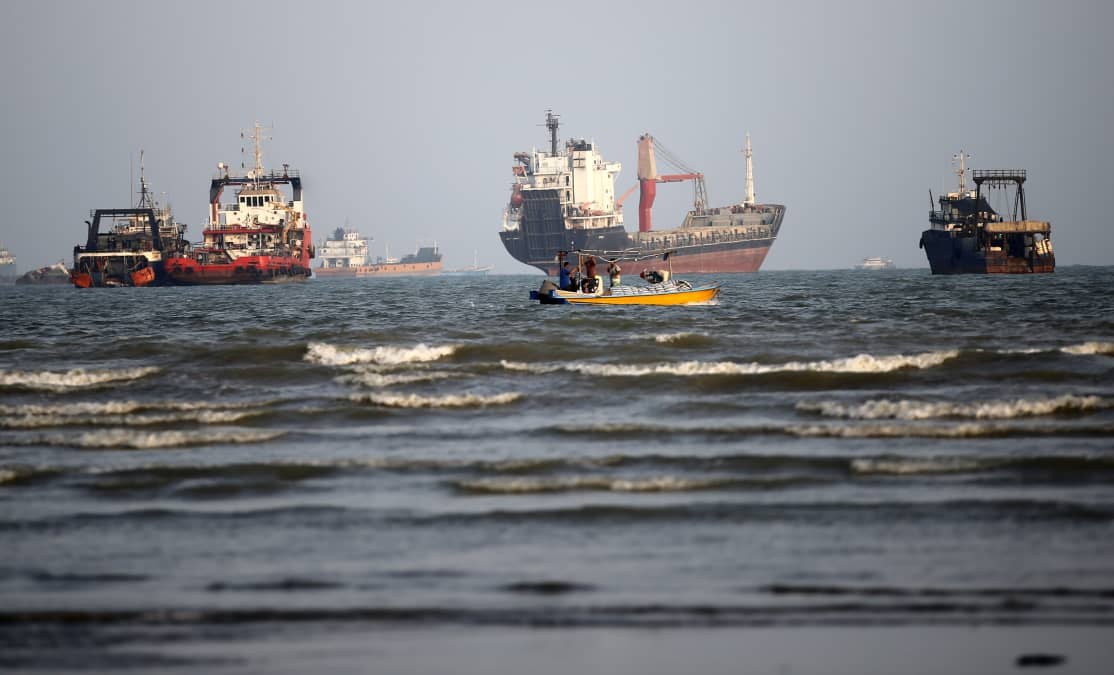
Iranian Foreign Minister Abbas Araghchi said Sunday that his country is ready for a "doomsday" war with the U.S., but that he is leaving diplomacy on the table so as not to "miss any chance for peace."
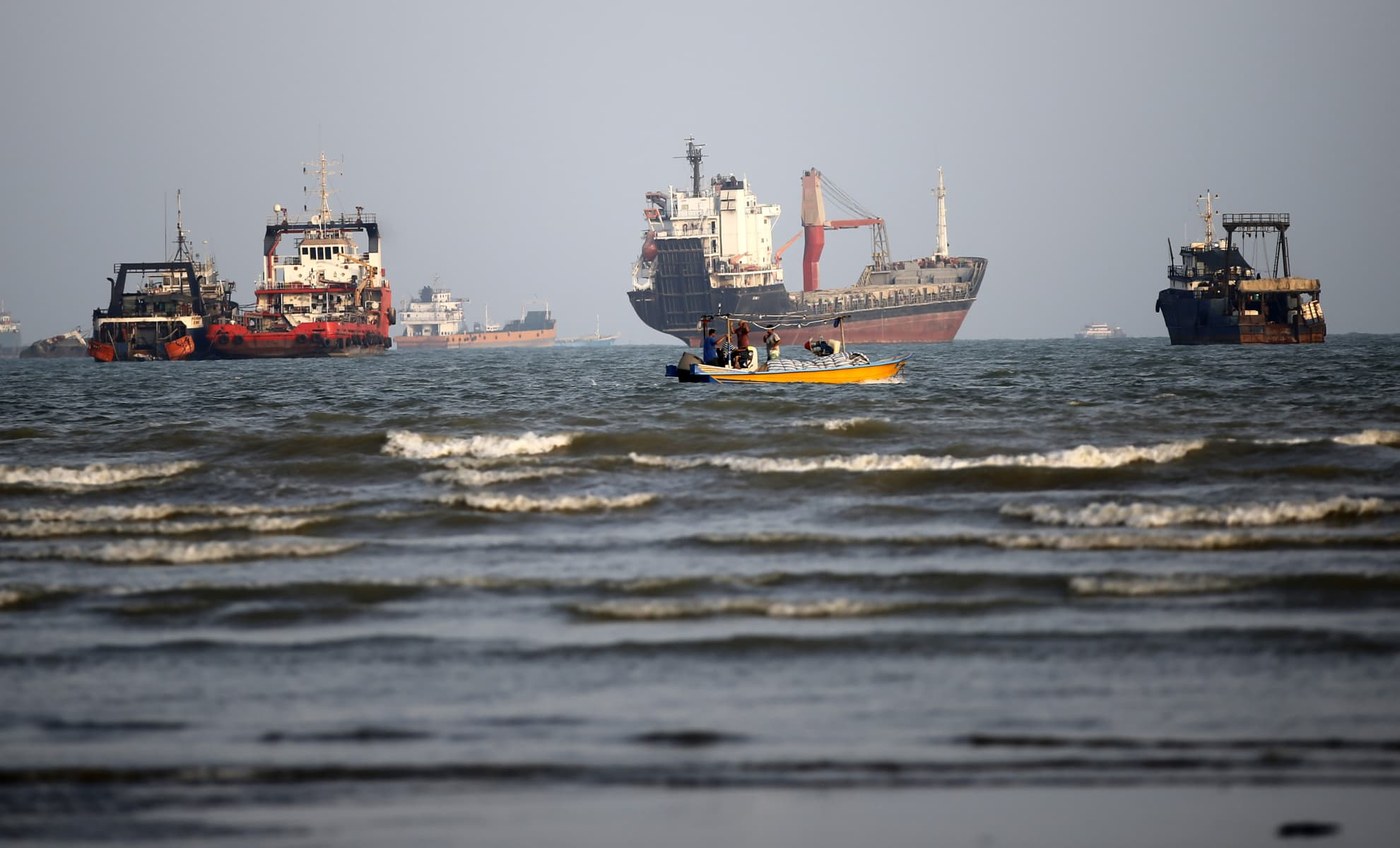
Araghchi made the comments during an appearance on NBC News' "Meet the Press" following last week's United Nations General Assembly. The U.S. and Iran have been locked in an on-again, off-again war since Feb. 28, which has caused a global oil shock that has spiked gas prices and fanned the flames of inflation.
"If you ask us, there is no reason why we should go back to diplomacy, but I am still trying diplomacy because I think we shouldn't miss any chance for peace," Araghchi said. "We are ready to negotiate as much as we are ready to face any challenge ... We stand firm in the face of any aggression against us, even if it comes to a doomsday war."
Araghchi on Friday had proposed reopening the strait and resuming nuclear talks with the U.S. within seven days if the Trump administration accepts its conditions.
U.S. President Donald Trump recently rejected Iran's proposal, which could have opened the critical chokepoint, the Strait of Hormuz. Iran has severely disrupted the strait during the conflict, restricting oil and gas exports out of the Persian Gulf. The Wall Street Journal reported that in addition to rejecting the deal, Trump said he expected to resume bombing Tehran after the U.S. midterm elections in November.
In a separate interview on NBC News, U.S. Ambassador to the United Nations Michael Waltz said that Iran's most recent offer was a "cynical attempt to put something on the table that they knew was unacceptable."
"The president will leave all options on the table to ensure the world is safe from Iran holding the world hostage with a nuclear weapon," Waltz said.
Iran is sticking to its position that it would only reopen the crucial Hormuz strait if its conditions are met, despite a rebuke from Trump, while a senior Iranian military leader stressed his country's readiness to continue fighting.
Iran's Islamic Revolutionary Guard Corps on Sunday claimed that it seized an autonomous U.S. submarine.
"Our conditions are clear; any progress toward the opening of the Strait of Hormuz is contingent upon the fulfillment of these conditions, and we will not back down from them," Iranian Foreign Minister Abbas Araghchi said in a post on his Telegram channel translated by Google.
"During our meetings with mediators, these conditions were fully conveyed, explained, and elaborated upon, and the mediators, in turn, relayed them to the American side," he said on the sidelines of the United Nations General Assembly in New York.
In his latest statement, Araghchi said intermediaries between the U.S. and Iran have yet to relay a formal response from Trump to Tehran. "Only a negotiated solution can break this deadlock," he said.
Tehran's conditions include a halt to what it calls U.S. "acts of aggression," an end to the naval blockade and economic warfare, and the release of Iranian assets, Iranian foreign ministry spokesman Esmaeil Baghaei said last week.
Iranian military leaders continued to underline their readiness to continue the war, which began on Feb. 28 with U.S. and Israeli air strikes on the country.
"The war is not over," the Iranian Student News Agency quoted Iran's army commander-in-chief, Amir Hatami, as saying. "We have won, but we must consolidate this victory, and the aggressor enemy, who has suffered heavy blows, must continue to be prepared to receive heavy blows from the soldiers of our beloved Iran," he said.
Underwater drone
Meanwhile, the IRGC navy claimed Sunday to have captured an American underwater drone in the Strait of Hormuz.
"IRGC Navy forces successfully captured an advanced unmanned underwater vehicle (UUV) belonging to the U.S. terrorist army," the Tasnim News Agency said in a Telegram post quoting the IRGC.
It described the vehicle as a Remus 600 unmanned underwater vehicle and added that it has been handed over to the force's specialists for data recovery.
"The IRGC Navy firmly declares that the Strait of Hormuz is closed [to unauthorized traffic]," it said.
U.S. Central Command did not immediately respond to CNBC's emailed request for comment.
The war has severely restricted energy shipments from the Middle East, sending oil prices soaring and raising concerns about accelerating global inflation.
But crude prices posted a sharp drop for the week as Tehran and Washington held discussions on the sidelines of the U.N. General Assembly.
West Texas Intermediate dropped 2.3% to close at $92.41 per barrel. Brent, the international benchmark, declined 2.1% to settle at $104.32. U.S. crude finished the week 7.9% lower while Brent was flat.
WTI is up nearly 61% year to date, while Brent crude is more than 71% higher over the same period.